A broken garage door spring rarely sneaks up on you. Most of the time it announces itself with a sharp bang that rattles the whole house, followed by a door that will not budge. If that sounds familiar, stop for a second and do not hit the opener again. Something important just failed.
Springs carry the full weight of the door. When one lets go, the opener is left trying to lift a door it was never built to lift alone. Below, we walk through the signs of a broken garage door spring, why it is dangerous to fix yourself, and what a proper replacement actually involves.
What a garage door spring actually does
Two spring systems are common on homes. Torsion springs mount on a bar above the door and twist as the door moves. Extension springs run along the horizontal tracks on either side. Both do the same job: they store energy so the opener only has to nudge the door, not hoist it.
When a spring is healthy, the door feels light. When it is not, every other part of the system strains to make up the difference.
The warning signs to watch for
A loud bang from the garage
This is the classic one. A torsion spring snapping sounds like a gunshot, and it usually happens while the door is closed and the spring is under the most tension. If you heard it, the door is almost certainly dead in the water.
The opener hums but the door does not move
You press the button, the motor whirs for a second, then nothing. The opener is running fine, but the door is too heavy for it to lift. That is a strong hint the spring is gone, especially if the door worked perfectly the day before.
The door feels impossibly heavy
If you can lift the door by hand at all, it should take two fingers to raise and lower, and it should stay put when you let go halfway. If it feels like a car hood welded shut, the springs are not doing their job. Do not force it.
A visible gap or stretch in the spring
Look at the spring above the door, or the ones along the side tracks. A torsion spring that has snapped shows a clean gap where the coil has separated. An extension spring that is failing often looks stretched out and slack compared with the one beside it.
The door rises a few inches and stops
A half-open door that stalls is another tell. The opener can start the lift but cannot finish it, because the spring is no longer helping. The same applies to a door that slams down instead of easing closed.
A door that is suddenly crooked
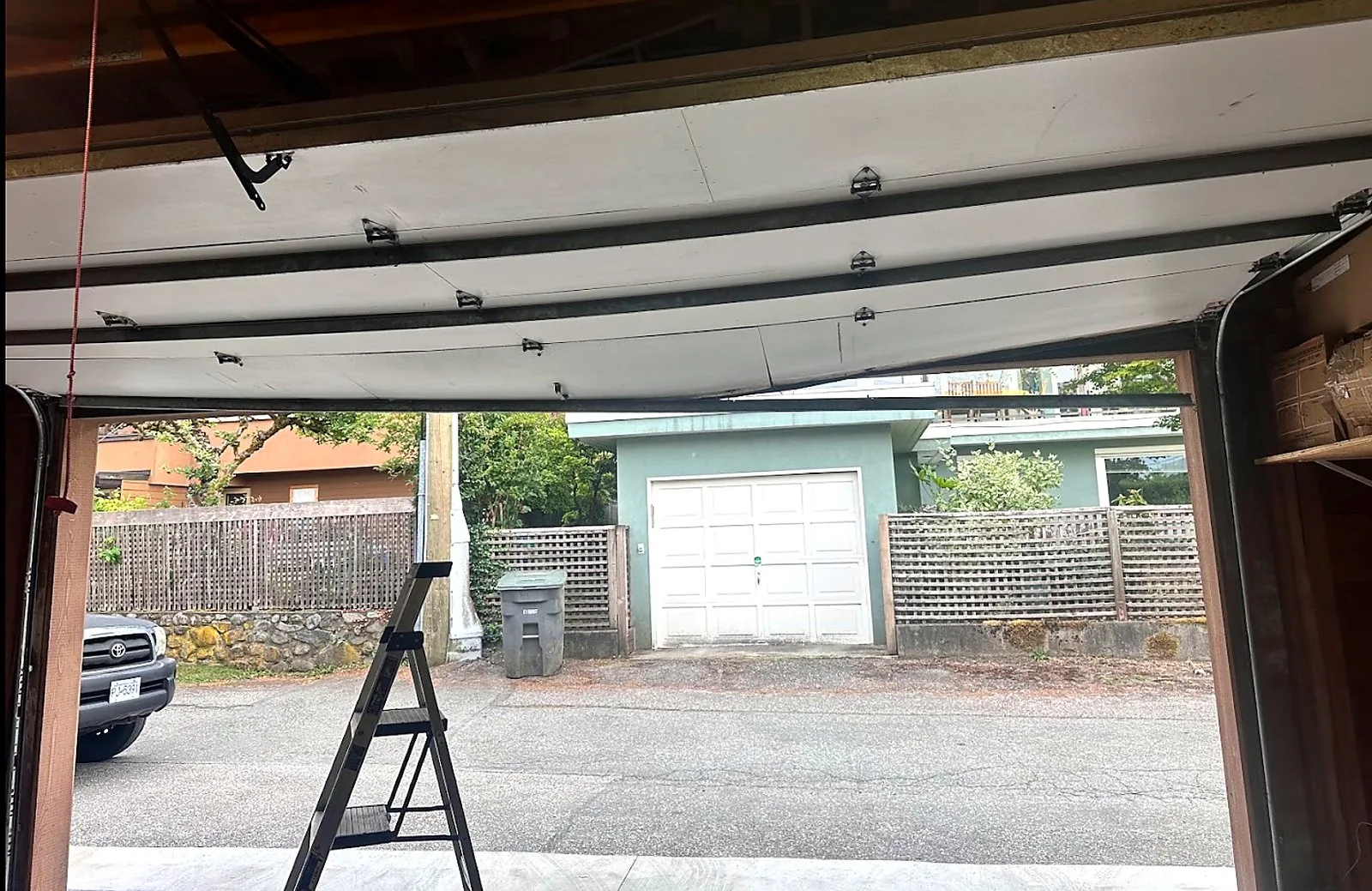
If one side sits higher than the other, or the panels look like they are trying to fold, a spring or cable has given out. Stop using the door. Running an out-of-balance door bends tracks and burns out openers.
Why you should not try to fix a spring yourself
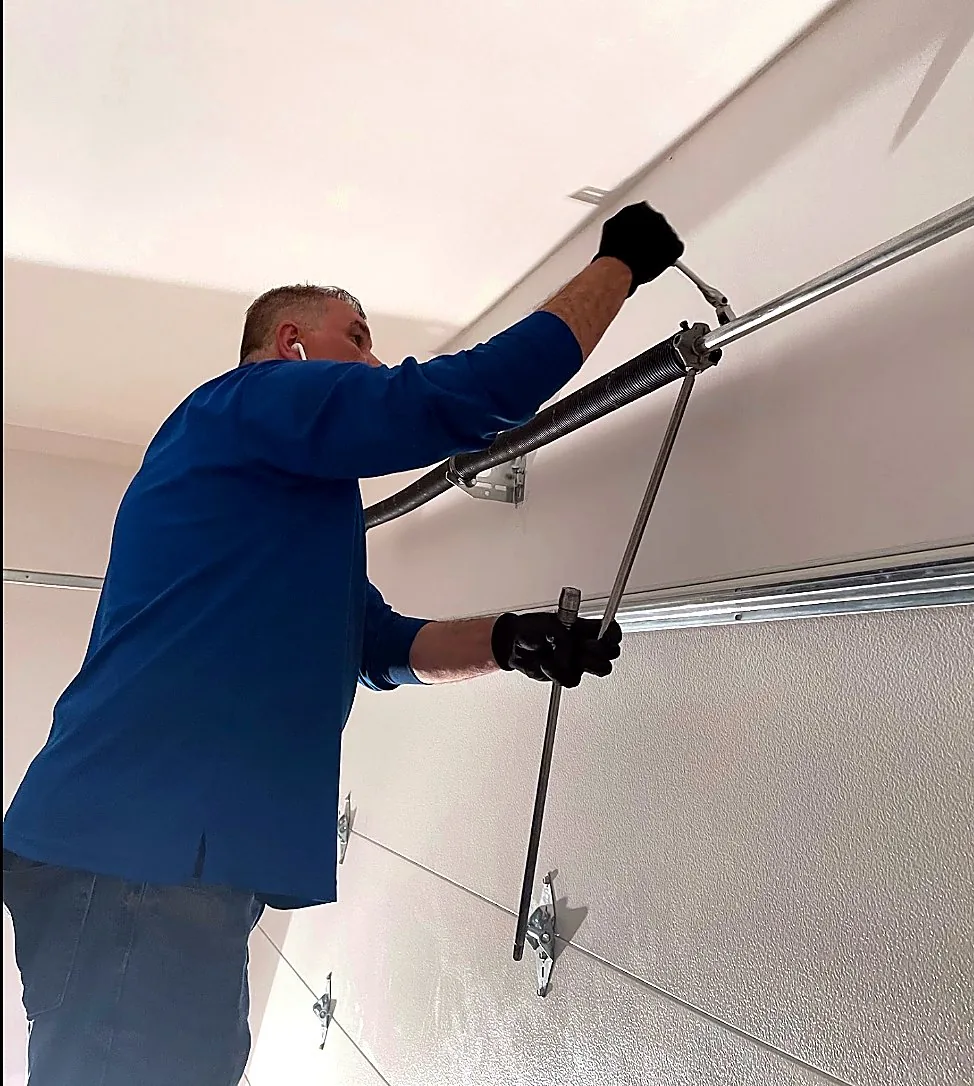
Springs are the one part of a garage door we genuinely tell people to leave alone. A torsion spring holds enough stored energy to break bones. The winding bars, the tension, the risk of the spring letting go while your hands are on it: none of that is a weekend DIY project. Extension springs are just as unforgiving and can whip across the garage if they snap mid-repair.
If a spring is broken, keep the door closed and call a technician. There is no safe shortcut.
Even small mistakes get expensive. A door that is run with a broken spring can bend a track, snap a cable, or burn out the opener. What should have been a spring swap turns into a much bigger repair.
What a proper spring replacement involves
A real fix is more than swapping one coil. We match the spring to the door's weight and height, and on torsion systems we replace springs in pairs. If one has failed, the other is close behind, and a mismatched pair wears out fast and leaves the door unbalanced.
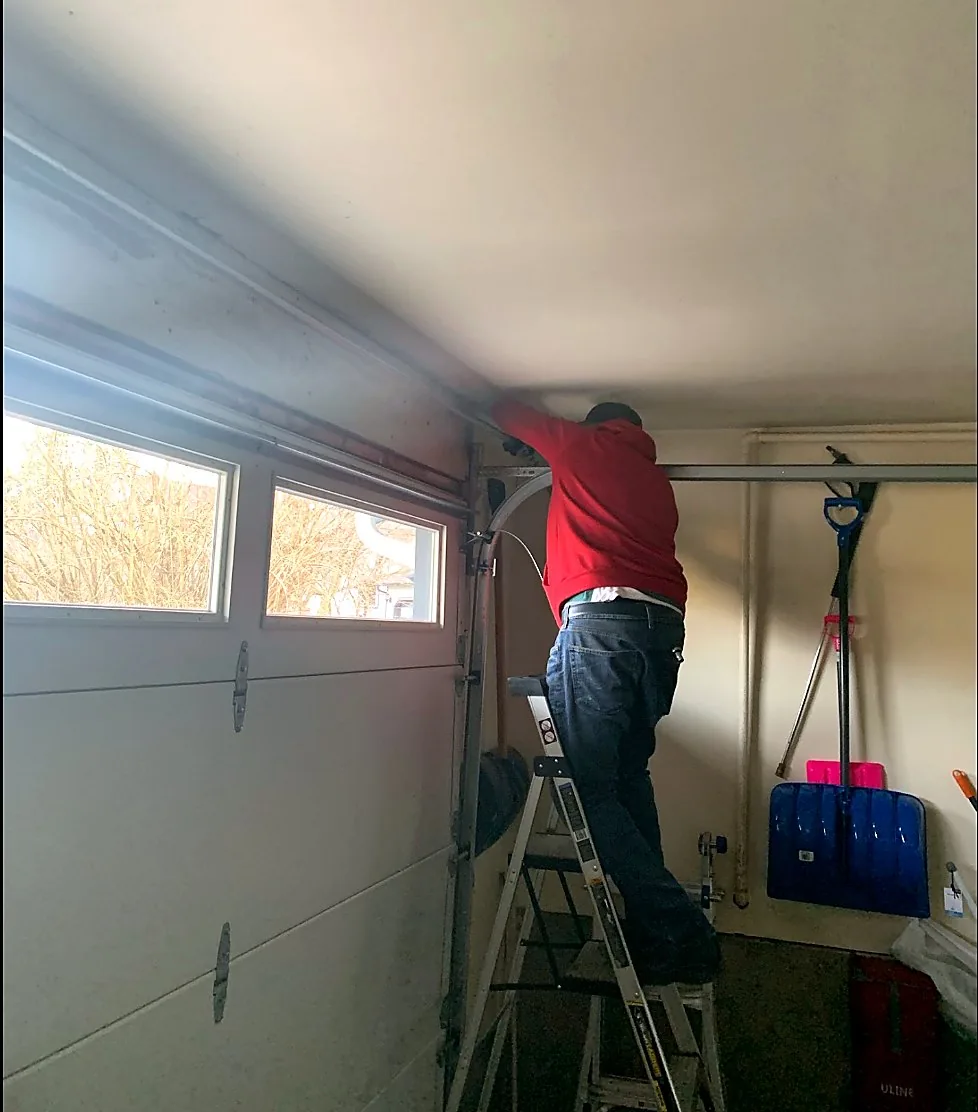
The job itself involves measuring the door, removing the old spring and any damaged hardware, installing the correct replacement, and re-tensioning the system to the right setting. Then we balance the door by hand, cycle it several times, and adjust the opener so it is not fighting the springs.
Every spring replacement we do carries a one-year warranty. When the right spring is fitted and the door is balanced properly, it should feel light and quiet again instead of strained.
Not sure whether it is a spring or something else? Our residential repair service covers springs, cables, and everything that connects them. For a stuck commercial bay door, we run commercial repair around the clock.
How to check safely before you call
You can gather a couple of clues without touching the tension. Look at the spring for an obvious gap. Try the door by hand, gently, and note whether it feels heavy. Listen for the opener humming without moving the door. Then stop and put what you found in front of a technician.
Here are the questions we hear most about broken garage door springs.
Hearing that bang is never a good start to a day. Call us at 604-388-9868 or book a repair, and we will get your door balanced and quiet again.